Friday, July 17, 2020

The Summer Intern Experience at LHG

Joshua Frankel recounts the benefits of gaining real-world public relations experience after recently completing his internship at our Charleston office.  Joshua will complete his undergraduate degree in Business from University of South Carolina next spring of 2021. 

During the fall of 2019 my biggest ambition as a rising senior was earning an internship before I graduate and begin my journey into the “real world”. Walking into my initial interview with Lou Hammond Group (LHG) I was filled with a flood of emotions. However, my nervousness, stress, and even a bit of intimidation all quickly dissolved within the first ten minutes of walking through the door. Aside from the incredibly talented team, the determination and leadership that is exemplified by everyone to be the best possible public relations specialist is astonishing.

Stepping out of the classroom and into the office at LHG gave me the opportunity and the experience to see how much the media landscape and traditional public relations industry has changed since Edward Bernays was originally hired by American Tobacco Company. Today, a vast variety of industries employ PR specialists, challenging them to tailor their pitches to break through the noise, as opposed to sending out hundreds of the same press releases in the hopes of getting a hit. In addition to this, while I was at LHG I learned the importance of building segmented media lists and creating customized pitches for writers and editors, all while staying current on outlets and events.

In the month that I spent interning with LHG, I couldn’t have been more surprised at how comfortable I felt asking questions, making calls, and adding input to projects. My favorite part about working for LHG was the genuine human connections I got to build not just with my teams but with the clients that we also work with outside of our office. For all college students and any rising juniors or seniors who may have the same ambitions as I did, LHG is not just an internship or a place where you come to get experience in the office. It is a haven of informative lessons and experiences on how to not just better yourself, but the entire public relations industry.


from Lou Hammond Group https://louhammond.com/2020/07/17/the-summer-intern-experience-at-lhg/
via https://louhammond.com

Thursday, June 25, 2020

Why do we travel?

Growing up in Florida, many of our public schools incorporated a language into our daily schedule, and it was in the third grade that it started to click for me that it was much more than vocab words we were learning, but the first peek into another culture that was so different from ours. Spaniards got to take naps during the day! And eat churros! And how cool what we call soccer, they call football! For a third grader, these were major highlights that got me fascinated with Spanish culture.
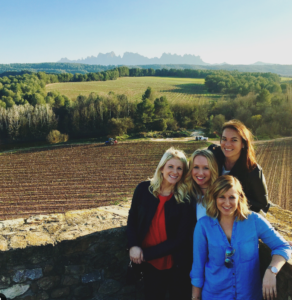
Why do we travel? To meet new people, try different foods, see art.After getting hooked through grade school, I minored in the language and was able to spend my junior spring of college studying abroad in Madrid and completing the program there, while living with a host family. While there was the occasional language barrier, like the time I mixed up ‘couch’ and ‘knights’ when my host mom asked me what my college mascot was, I loved getting to see the city from the local’s perspective. With weekends free, my classmates and I traveled throughout Europe and while it wasn’t always glamorous (hello hostels) we learned more from the people we met along the way than we did in the classroom.

My passion for travel is easy to fulfill by living in New York, with the convenience of having international airports within reach, often leading to great flight deals. It was not uncommon to book a trip on a moment’s notice. Process: see a great flight deal – $300 to Iceland! $250 to Barcelona! – quickly text a few friends and go from sitting on the couch to booking trip in 15 minutes. (Good thing those PTO requests always got approved!).  To consider the world our playground was a blessing we never truly stopped to appreciate it until COVID-19 hit, and we suddenly couldn’t travel freely.

Besides the rush of adrenaline I’d feel from snagging a great deal, why do we travel? Sure, in recent years there’s people that only ‘do it for the gram,’ but we all know it’s much deeper than that. We travel to meet new people, try different foods, see art. We travel to see if it can’t really be all that hard to drive a car with the steering wheel on the right side (spoiler: definitely a bit trickier than it seems.) We travel as a way to bond with our friends, family and partners and create experiences and memories that can change the way we see the world. To escape the bubble we live in and take a look into the ways others eat, play, drink, live and dream.
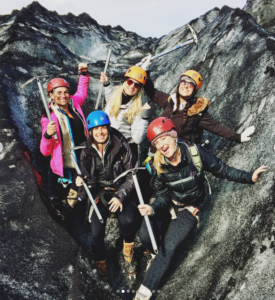
We've had to learn a new way to travel.

When the pandemic started to feel real, I was traveling in Scottsdale, Arizona for a bachelorette party when the NBA paused the season due to the virus and Major League Baseball shutdown spring training. We started hearing rumblings of not being allowed to fly back to New York and even spent a few minutes playing out the possibilities if our flights were cancelled. Thankfully we were able to fly home, but it was the first time I stepped on a plane and suddenly felt scared. We wiped down our seats and the airline did their best to space us out but there was a lingering of uncertainty that didn’t go away for the duration of the flight.

Returning to New York felt eerie. People in Arizona were visiting bars and swimming in public pools and suddenly I’m elbowing people for toilet paper and stocking up soups from Duane Reade. On March 13 we were told we wouldn’t be back in the office for an undisclosed time, and it’s crazy to think of how the world’s changed over the last four months.

Not only was leisure travel now on hold, but my job focuses on travel – what would happen to the tourism industry? After we all took a few days to catch our breath, we set into action. Virtual experiences, live streaming web cameras, video conferencing backgrounds – we started brainstorming ways that we could bring the destinations to consumers who were suddenly bound to their home.

New Jersey transported people to the iconic Jersey shore with a compilation of beach cams and created a Spotify list of greatest hits from some of the state’s best talent. Alexandria, Virginia brought visitors the overly cute “Lamb Cam” at Mount Vernon and live streaming of workout classes. Nassau Paradise Island even launched an app for TVs and smartphones that featured six different calming beaches you could play.

As the stay-at-home orders continued, businesses started getting more creative. Wineries from around the world, including Sonoma County, launched virtual wine tastings – allowing customers a personalized experience to engage with some of their favorite brands. Destinations launched cooking classes, quilting lessons and musicians started teaching guitar through services like Zoom. We all suddenly found ways to connect with the places we loved from our kitchens and couches.

Being confined to my apartment helped me slow down. Suddenly, it wasn’t about all far-off places I could go but about exploring where I lived. Slowing down meant taking previously unexplored walking paths, learning to cook new recipes and overall appreciating the small beauty when we could find it, like a clear spring day or the sun setting over New Jersey.

With many international borders closed to Americans, many are predicting a surge in staycations and road-trips this summer. Data has shown travelers are still hesitant to board a flight for a vacation but are open to driving themselves to a destination in their own car or even an RV. DMO’s and CVB’s, short on marketing budgets, are also going after the local market with a new lens, encouraging locals to play tourist for a day in their own city and visit restaurants, bars and shops to help reinvigorate tourism.

I’m looking forward to discovering the hidden gems throughout New York City and the surrounding state that may have never been on my radar. New travel goals for this summer include finding the best soft serve vanilla ice cream cone in the tri-state and visiting a u-pick farm for the first time.

We travel to learn and educate ourselves about the way others live but when travel went away many of us learned new ways to do it. Special places are all around us and I think I’m not alone in learning it doesn’t always take a plane ticket to have a great adventure and a way to build incredible memories.

While we wait for the world to reopen to travel and dream of the once-in-a-lifetime trips to places like Peru or Thailand, it’s a good reminder that sometimes an ice cream cone with people you love can also be the perfect setting to create a lasting memory.


from Lou Hammond Group https://louhammond.com/2020/06/25/why-do-we-travel/
via https://louhammond.com


Friday, May 8, 2020

Our Founder Lou Hammond Provides Travel Insights for Forbes

Our Founder Lou Hammond recently provided insights regarding the future of travel to Tamara Thiessen for Forbes. Read a snippet of the article below with her thoughts:

In the post-Coronavirus travel world, most Americans will holiday at home, and travel by car. The combined effect of ongoing international travel bans, easing but not over lockdowns, and the desire to stick close to home (now we’ve all grown so used to them!) will fuel that trend experts say. 

Lou Hammond, founder of the tourism and hospitality agency of her name, tips regional and domestic U.S. travel to thrive in 2020 as a result. As soon as people get the go-ahead, they’ll be off she says. “Vacation is considered a right, perhaps more this summer than ever. However, travel planning must be easy and not too far from home.”

The predictions are backed by a Skift survey, showing 40% of Americans say their first post-COVID trip will be by car, within 100 miles of home. 26% will go over the 100 mile mark, but stick to the U.S., and to cars. Only 16% will take a flight; 8% plan to leave the U.S. Treasury Secretary, Steven Mnuchin, is fueling the travel local trend, encouraging Americans to focus on domestic vacations this year as the outlook for international trips looks dim. 

Travel will be tricky, with all the health protocols in place. So the closer people can stay in their own little secure travel world the better. Which is why Lou Hammond believes cars will be the chosen transportation for most. “The key will be getting out and about, with little planning and without fuss. The family summer road trip may very well return as an important recovery factor. Why? Because the whole family can go, gasoline is plentiful and it seems patriotic to see the USA.”

Smart marketers should plan now for family vacations for all ages, she says, offering “the true American experience.” “This presents opportunities to visit smaller cities with colorful history and culture: Alexandria and Norfolk in Virginia; Charleston, South Carolina; Montgomery, Alabama; Natchez, Mississippi; Paducah, Kentucky.”

For those craving a little European influence, Hammond suggests Santa Fe, New Mexico; Santa Barbara, California; or Providence, Rhode Island. She hopes local travel will prove an economic savior. “Perhaps driving vacationers will be surprised how much America offers and come away with a new appreciation lending support to our needed recovery.” 


Read the full Forbes article here.


from Lou Hammond Group https://louhammond.com/2020/05/08/our-founder-lou-hammond-provides-travel-insights-for-forbes/
via https://louhammond.com

Wednesday, April 29, 2020

Our Founder Lou Hammond Provides Travel Insights for The Points Guy

Our Founder Lou Hammond recently provided insights regarding the future of travel to Laura Motta for The Points Guy. See her commentary below

Q: Tell us a little bit about yourself, your organization and why you love to travel.

A: LHG was founded 36 years ago and we have served the travel community in many capacities over the years. Travel is an indispensable part of our lives and we recognize that, beyond the joy one feels, travel bonds us globally like no other business. It gives us an understanding of the world and cultures that brings us together in the most meaningful way.

Q: When will we be able to travel regionally, domestically and internationally?

A: If I were to know that I would be King Solomon and always win in Vegas. While slowly we are starting to see a “leveling off,” what that really means no one knows. As soon as the green light shines, certainly regional and domestic USA travel will flourish particularly with transportation by car. I remember thinking in the “old days” the drive market was one or two tanks and we should promote appropriately. Today, let’s look at five+ and find a way to introduce multi-destination stops for an enjoyable vacation. Airlines, we just don’t know but always remain hopeful. On the international front, it will take time and that makes me sad for our global partners. However, there will be “pent up” interest and it might happen sooner than we think. Realistically I think the fall but hopefully it can be sooner.

Q: Where are you based?

A: We have offices all over the country but at the moment I’m in Charleston, South Carolina.

Q: Where do you personally plan to go, in each of those categories, for your first trip?

A: We are very fortunate as the South has many small towns to explore in an easy fashion. Speaking of “easy,” that will be key to getting people out and about so planning can be immediate without fuss. Growing up in Texas there was always the family summer “road trip” and this may very well return as an important recovery factor. I suggest smart marketers will plan now for the family vacation to include all ages.

Q: What do you think will change about the way we vacation? (besides staying away from large crowds)?

A: Bottom line, we will be a changed nation seeking perhaps different core values. What that means to travel, I do believe there will be more courtesy, appreciation and that America will be the vacation playground for the immediate future. Value will continue to play an important role abiding by a phrase I coined many years ago, Easy to Go, Easy to book and Easy on the Pocketbook! With people returning to work and offices, they will have little time to plan, so I recommend let’s start organizing now for their upcoming travel. At the end of the day, for sure travel has taken a big “hit” but Americans know they deserve a vacation and my money says they will GO and we will all be pleasantly surprised. Yes, I am counting on that.

Read the full article from The Points Guy here.


from Lou Hammond Group https://louhammond.com/2020/04/29/our-founder-lou-hammond-provides-travel-insights-for-the-points-guy/
via https://louhammond.com

Friday, April 3, 2020

Zoom in Style

Branded Zoom Backgrounds

The virtual background feature allows users to display an image or video as their background during a Zoom Meeting. Users can also upload their own images or videos as a virtual background. There are no size restrictions when uploading a virtual background but Zoom recommends cropping the image to match the aspect ratio of your camera before uploading it.

Example: If your camera is set to 16:9, an image of 1280 pixels by 720 px or 1920 pixels by 1080 pixels would work well.

Clients can push out images via their social media channels that they would like users to display on their personal virtual calls or meetings. Clients can also set up a ‘virtual party’ instructing their followers to join a video conference with them, using a particular image as the background.

Example Background

How to Upload

  1. Sign into the Zoom desktop application.
  2. Click your profile picture then click Settings.
  3. Select Virtual Background.
    • Note: If you do not have the Virtual Background tab and you have enabled it on the web portal, sign out of the Zoom Desktop Client and sign in again.
  1. Check ‘I have a green screen’ if you have a physical green screen set up (i.e. sitting behind a blank wall). You can then click on your video to select the correct color for the green screen.
  2. Click on an image to select the desired virtual background or add your own image by clicking + and choosing if you want to upload an image or a video.
  3. If prompted, click Download to download the package for virtual background without a green screen.

Zoom Tips

With Zoom becoming a major way that meetings and networking get done in the COVID-19 landscape, here are a few tips to make sure you put your best foot forward when you take your professional interactions online.

  1. Camera Angle:Place the camera slightly above eye level for the most flattering angle. If you’re using a laptop, you may need to raise it up by putting some books underneath it—just ensure its stable and won’t move once your session begins. When it’s your turn to speak, look directly at the camera—right above the person(s) on screen. When someone else is speaking, look at them.
  2. Social Distancing (on Zoom too): Position yourself a comfortable distance from the camera, approximately 3-4 feet. Avoid leaning in too closely. You can gesture as you normally would, just don’t bob around too much, which can be distracting for viewers.
  3. Lighting: Avoid being backlit (no window or bright light behind you), so that you don’t look like a dark silhouette. Position yourself so that your face is evenly lit with natural light (or overhead light that’s not too harsh), if possible.
  4. Audio: Remove yourself from an environment with ambient noise. Use your computer’s built-in speakers for quality and ease. If using a phone, put it on speaker, don’t hold it up to your ear—and be sure the computer mic is turned off to avoid interference. Headphones are also a great option so you can hear better. They also help reduce feedback noise from your or someone else’s computer.
  5. Backdrop:Use this opportunity to say something about yourself but keep it professional. Bookshelves, artwork that’s not too distracting or a wall painted with a solid color are good backdrops to consider.
  6. Relax and Smile:Get comfortable in front of the camera and let people see you are happy to be there.
  7. Internet Connection:Always check your connection before joining a meeting. Make sure you’re connected to Wi-Fi and located near the router for the fastest connection. Keep your phone handy just in case.
  8. Remove Distractions (and potentially sensitive material): On your computer, close out of all documents, email and other applications before you join the meeting. You can also place your cellphone on Do Not Disturb so the noise or vibration doesn’t distract you.
  9. Fist Bumps: For meetings with colleagues, employees or other zoom users, virtual fist bumps go a long way to build unity and togetherness.

We hope you find this resourceful for your virtual meetings. Well wishes from team LHG.


from Lou Hammond Group https://louhammond.com/2020/04/03/zoom-in-style-branded-zoom-backgrounds/
via https://louhammond.com

Managing Social Media in the Midst of COVID-19

With COVID-19 affecting lives across the world, there’s no denying that it’s also affecting the content we’re sharing on social media as well. Brands are more aware than ever about what they’re choosing to share on their platforms to ensure sensitivity and connection. At LHG, we represent a wide variety of travel, tourism and hospitality organizations, all of whom have been impacted by COVID-19. These are the trends we’re seeing and what we’re recommending for our clients to share on social media during these unprecedented times.

Recommendations on Social Content

  • Virtual Experiences – highlight things that you or your members/partners are doing virtually or in a new way at this time amidst the crisis to provide value for others (Ex: music streams with partners, wellness live experiences with partners or hotel spa directors)
  • Community Updates – share relevant COVID-19 updates or happenings as it pertains to your organization and community
  • Positive/Uplifting Community Stories – share what you’re doing to help the community and/or educate on volunteer opportunities and community outreach (Ex: stories of goodwill from businesses supporting nonprofits or helping healthcare workers, news articles about where/how to volunteer)
  • Local Business Support – let others know how they can support you during this time, showcase those who are offering their goods online or via social media, support hotels/businesses, drive awareness for restaurants
  • Hyper-Local/Nostalgic Content – remind the community of where they live or love to visit and why it’s special, giving them something to look forward to when this is over
  • Live Video – engage with your audience with the help of LHG’s Facebook and Instagram Live Best Practices

Helpful Social Articles

Even amidst this crisis, there is still an opportunity to connect and engage with your audience on social media as well as be a valuable resource for the community in a meaningful and thoughtful way.

Stay safe, all.


from Lou Hammond Group https://louhammond.com/2020/04/03/managing-social-media-in-the-midst-of-covid-19/
via https://louhammond.com

Monday, March 16, 2020

Reference These AP Style Rules During Global or Domestic Crises

The Associated Press (AP) Stylebook is an English grammar style and usage guide created by American journalists working for or connected with the Associated Press to standardize mass communication. Like many public-facing organizations and news outlets, Lou Hammond Group follows the AP Stylebook to promote consistency for ease of reading and a common understanding in press statements, news articles and other formal announcements.

As publicists, we see firsthand how the media climate changes to address global or domestic crises and we must always keep up with the changing story — utilizing AP Style along the way. We understand writing during uncertain circumstances may not be a part of your regular routine and potentially out of your comfort zone. To help streamline your writing, we have pulled together a few tips and rules from the Associated Press Stylebook related to disaster coverage.

Pandemic and Epidemics

  • An epidemic is the rapid spreading of disease in a certain population or region; a pandemic is an epidemic that has spread worldwide.
  • Use Dr. in first reference as a title before the name of an individual who holds a doctor of dental surgery, doctor of medicine, doctor of optometry, doctor of osteopathic medicine, doctor of podiatric medicine, or doctor of veterinary medicine.
  • On first reference, use Centers for Disease Control and Prevention. Precede with national, federal or U.S. if needed for clarity. CDC is acceptable on second reference for the Centers for Disease Control and Prevention, part of the U.S. Department of Health and Human Services.
  • The shorthand CDC takes a singular verb: The CDC is investigating.
  • Stories should contain a mention of a disease’s official name, accompanied by an explanation. Common phrasing such as “the new virus” is acceptable on first reference.
    • For example: COVID-19 must be mentioned somewhere in an article referencing coronavirus.

Hurricane

  • Capitalize the word hurricane when it’s part of a storm’s assigned name — e.g., Hurricane Dorian.
  • Regardless of the hurricane’s name, use it and its, not she, her or hers or he, him or his, in pronoun references.
  • Hurricanes and typhoons are tropical cyclones with a minimum sustained surface wind of 74 mph or more. Hurricanes develop east of the international date line, and typhoons originate west of the line. They are called cyclones in the Indian Ocean and in Australia. After one loses strength, often after landfall, it downgrades to tropical storm status.
  • Capitalize category and use a numeral when you give a hurricane’s strength.
    • For example: A Category 5 storm made landfall Tuesday night.

Earthquakes

  • Earthquakes are registered in magnitude and should be written as either a magnitude 5.9 quake or a 5.9-magnitude quake.
  • You don’t need to write Richter scale or any other scale. According to the AP Stylebook, the Richter scale is no longer widely used.
  • Temblor is a synonym for earthquake. Tremblor is not. Quake also is acceptable.
  • The main earthquake source is the U.S. Geological Survey. Note the name.
  • According to AP, “The word epicenter refers to the point on Earth’s surface above the underground center, or focus, of an earthquake.”

Tornado

  • Tornado strength is measured by enhanced F-scale rating from EF0 to EF5. An EF2 or higher is considered a significant tornado.
  • Tornadoes is the plural of tornado
  • A tornado warning is issued by local weather service to warn of existing
  • A tornado watch alerts the public to the possibility of a tornado in the next several hours.

During times of crises, the public looks to its news sources to stay up to date on the latest news. The AP Stylebook is a valuable and helpful point of reference no matter the topic.


from Lou Hammond Group https://louhammond.com/2020/03/16/reference-these-ap-style-rules-during-global-or-domestic-crises/
via https://louhammond.com